Reminiscing Thoughts and Musings on Time.

Photo by Susanne Jutzeler, suju-foto on Pexels.com

Welcome to the month of March, aka the Springtime month! Or for some people, the allergy season. But hopefully, it will be more of a month of welcoming spring. That is what we hope for though the weather in some areas might have different ideas. We also just had a time change. We sprang forward last Sunday. And of course, no one likes the loss of one hour. Some might prefer the extra daylight, but the struggle is real for the early mornings where sunrise is delayed by an hour. But this got me thinking a lot about the concept of time. And it also had me reminiscing and nostalgic in many ways. So, this post is going to be a mix of personal and foxy witch style thoughts. Hope you enjoy it! Let’s get into it.

A year ago, I had been struggling to get my life back in order after my major back issue in 2023. Though the experience had been humbling, it was difficult to do things as I had done before. I knew patience was important as recovery can be a lengthy process. For me, true recovery has taken a full year and a half to get back the flexibility I lost and the strength. I can walk and run again like I did pre-injury, though I’m more aware of how I move now. In some ways, the flare-up feels like it happened so long ago that I see sepia tone when I think of it, and yet, I remember on a visceral level what that experience was like. Oddly enough, as terrible as it was to go through it, I realize now that I’m grateful for it. Looking back, I see that it taught me to appreciate what my body is capable of in terms of healing and how it communicates with me when it needs rest. It made me connect with my body and spirit in a unique way that still shapes how I do things today and will continue to do.

This leads me to think of how time moves in such a way that we can’t qualify it with the right words. What is “time”? Is it a tangible concept that we can attribute to meaningful experiences in our lives or is time itself a concept that has been condensed into something from what it actually is? From a purely scientific perspective, time is defined as something measured, like mass, for example. Einstein introduced the concept of space and time. No doubt we’ve discovered that time is quite complex to explain. We’ve asked ourselves the age-old question: can we go backwards and forwards in time? We know just from living on this planet that time zones differ from hemispheres. From a spiritual standpoint, one wonders if we can “see into the future” or “re-write our past”. And from a different perspective, do these things truly matter or are we neglecting the present by doing so?
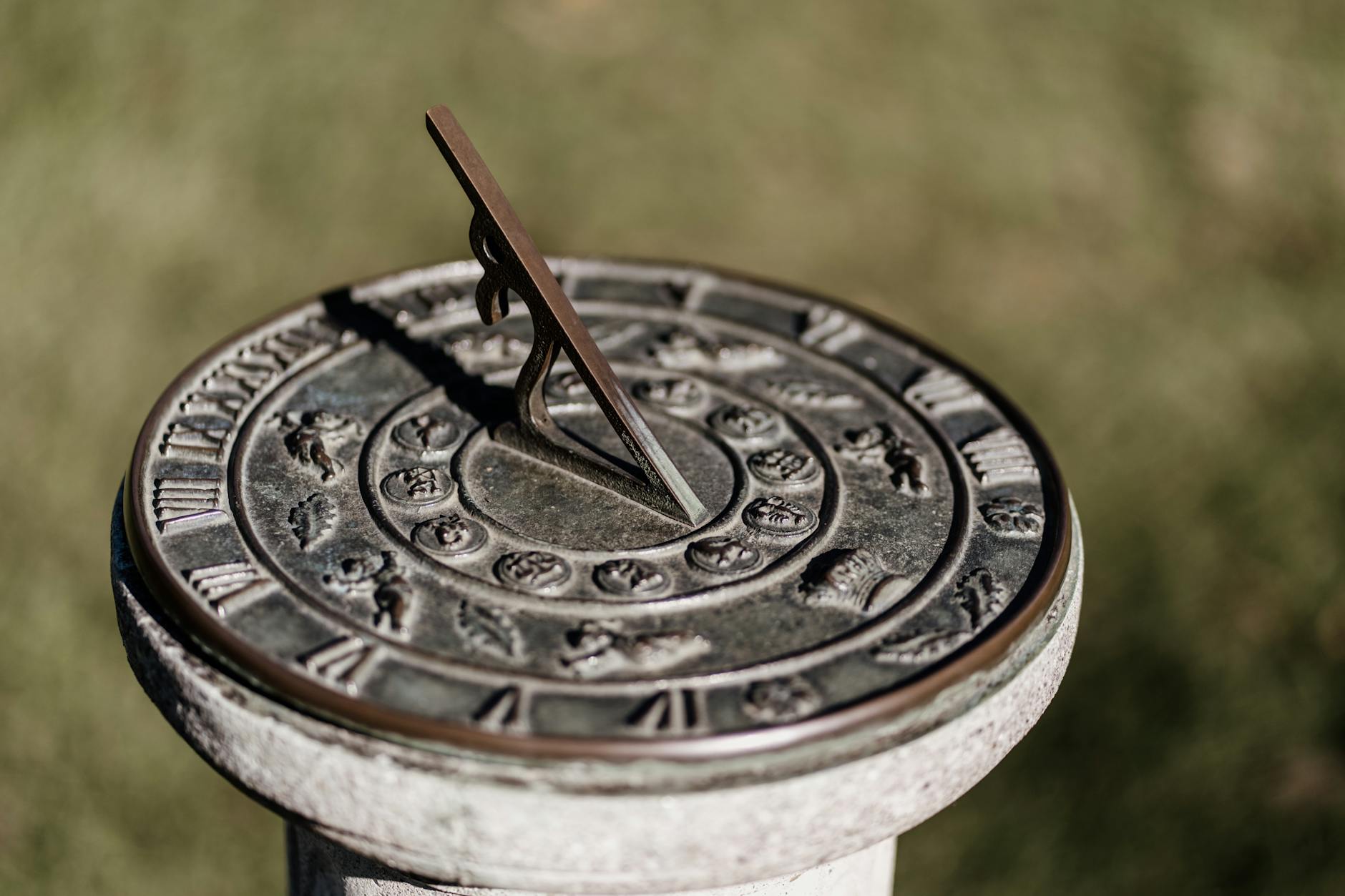
Photo by Joel Zar on Pexels.com

These are not unique questions nor are they questions that get asked infrequently. I’m sure many of us wish we could change events in our past or guarantee a particular outcome in the future. Neither possibility is currently existent. The reason I’m focusing on time for this particular post is because I’ve caught myself doing this too. I long for a specific result in the future, and I find myself reminiscing and nostalgic of some things while simultaneously “re-writing” in my head how some things should have unfolded instead. And it does take away from the present. Yet it’s something that persists. I’ve been nostalgic for remnants of my teenage years that seemed a limited time of carefree enjoyment. There are moments we often feel more keenly than others. I think the loss of that time is one I do feel. Things that went by in a blur before I could blink have an irony of feeling so far away and yet like it just happened. Our sense of memory is inexplicably linked with time.

Outside of the personal things that have to do with time, we consider time with regard to rituals and how we conduct them. Timing is then considered auspicious. I always used to wonder: why do we care about what planetary alignments are in place or what phase the moon is in for certain rituals? I did a little bit of research on this that leads me to believe this dates back to pre-history, more specifically pre-agricultural revolution. Think about how we measured the length of a day and year. We learned by observing. We know how the tides work through observations. And we’ve seen the effects of the tides on living beings. These observations are what I believe led to the assignation of auspicious time in activities. This makes sense on a broader scale as to farming and what types of weather are conducive to it. The same applies to ritual workings.

Some ritual workings are meaningful for winter and on a full moon. When we work in tandem with the cycles of nature, we create an inner harmony within ourselves. Thus, time plays an important role beyond measurement. Time is a factor that reminds us to stay in the present. It is something I am trying to be more conscientious of because the present moment can be precious and easily overlooked if not.

That’s it for now! I have much more planned for future posts, but I did want to share my thoughts about time for this blog post.

If you read this far, I appreciate it! And finally, I’ll be posting another Tarot blog post soon, in time for April! We will talk about being in the year of the Hermit, Key #9 of the Major Arcana, that Revolution Number 9 I mentioned at the end of the last blog post. I will also be posting about the lunar new year, Lupercalia, and galactic astrology as I’ve said, even though Lupercalia has already passed. It might be a “holidays and festivals” post. These are snippets of what posts I plan to make. Again, thank you all for your support.

Disclaimer: None of what I’m stating in this, or previous blog posts should ever be used in lieu of financial decision-making, medical and/or psychological treatment, and life-changing alterations.

Thank you for reading so far and for being patient with me as I know this post was long overdue! If you are interested in my Tarot readings and creative writing Tarot courses, head over to my site:

Until next time, have a blessed rest of the month. Namaste. With love, the Foxy Witch.

Ritual, appropriation, and culture

Photo by Pixabay on Pexels.com

I have been thinking a lot about this post because it is a sensitive subject. It is something that has been on my mind for a while now. The topic? Cultural appropriation. Oh yes. Two words that we know permeates the world today. There is of course a difference in respectful adoption and adherence to certain religious rules or cultural guidelines. However, appropriation is still rampant in many aspects. Why is this so? Perhaps it is the amalgamation or culmination of several cultures coming together. To some degree, this is the case in areas that are diversely populated and influenced which then brings us to the question as to how or what appropriation is in the first place. From my perspective, one type of appropriation is the purposeful usage of another culture’s beliefs or customs without due credit and profiting from it, especially if the dominant culture has oppressed the culture from which it takes. This type of appropriation is much easier to identify. The other kind is a little more challenging. It is the normalization of cultural appropriation, sometimes without ill-intent but it is with a lack of understanding or research. In spiritual communities, we try to be conscious of cultural beliefs and practices. It is doubly important though if we are eclectic practitioners. I say this because while I come from a traditional Hindu background and am a hereditary practitioner as well, I would probably still fall under the eclectic umbrella. So in the midst of the summer season, a solar eclipse, a new moon, and five planetary retrogrades (though Venus is going direct soon), there is a lot to talk about with all that is going on in the world as well as in our etheric bodies. Let us tackle the cultural appropriation topic first. I apologize in advance if I have not addressed everything, because there is so much discuss.

Am I guilty of cultural appropriation too? To examine this, I look back at how I began beyond my own heritage. I realize now that part of my journey through witchcraft had to do with me not trusting my instincts and listening to people who were dogmatic about how to conduct ritual, what herbs to use, how to set up my altar, how to meditate, how to connect with the divine—they were dogmatic in every part of my spiritual life. I read books and tried to see if there was truth in what I was learning. I slowly started to look at what I was learning and see whether this was in the spirit of practice or not and if it was culturally insensitive. In terms of appropriation, one thing we do not discuss enough of is the prevalent use of sage bundles. This is extremely important to talk about. Sage is used in some indigenous cultures for sacred, medicinal, as well as other spiritual properties and is often not sold in stores as bundles. A lot of people make use of sage and Palo Santo for sacred smoke and cleansing. But it is something to be mindful of as far as Palo Santo and sage go, to know what cultural implications this has in terms of practice as well as the fact that white sage is endangered, and Palo Santo has not always been ethically sourced. In my own ignorance before, I too used sage and Palo Santo to cleanse. Now, I use my own methods that I take from cultural practices that I grew up with personally. If I do use sage, it is common sage that can be eaten. I like to take them from my garden and make elixirs or use them in cooking. If you are unsure about some practices, I advise educating yourself about it and in keeping a respectful understanding of them, especially if they are closed or initiatory, and hurtful to other cultures if practiced.

Often, many spiritual traditions are cemented in the culture of the country or region it is from—and the transmission of those spiritual practices are passed on through a variety of means including oral, written, migration and exchanges. We know that spiritual traditions can be diverse and unique to individuals in the same area. Many of them may adopt new customs and borrow from belief systems and incorporate them into the existing culture, and this is after all much of what we end up doing. We evolve to some degree in that manner. With that, I want to touch base on Yoga and Reiki practices today. l will begin with Yoga here. As a Hindu, I know that Yoga is both a religious part of our lives as well as a physically enriching practice. Yoga in Sanskrit means union, and the implied meaning is union with the divine. The practices or Asanas are designed to bring us closer to that–to the realization of the Self. Yoga can also improve a person’s overall bodily constitution, help in coping with mental health disorders, and bring a certain elasticity to one’s life in general. Yoga is a Hindu practice, but it can transcend the religious and cultural background. Yoga has universal appeal because of the benefits it offers. As a Hindu, I am not offended by people practicing it. However, I found that many people were surprised by the religious overtones of Yoga or that it could even be considered culturally appropriated by the mainstream. Many Yoga studios have developed since it gained popularity. There is seemingly a type for every kind of Yogic practice including hot yoga, sexy yoga, goat yoga, and even beer yoga, to name a few, and some of these take away from the intended benefits that Yoga offers. It then ends up seen as more of a wellness trend than a spiritual practice with its roots steeped in Hinduism. While Yoga may feel like a personal practice, it is largely devotional too. Many of us who are Hindu and practice Yoga consider it sacred and believe it cannot be altered in that respect. We also know that it like anything else changes with us and with time. With that in mind, I hope anyone who practices Yoga understands the cultural and religious aspects and approaches it as such, a sacred and transformative practice.

Reiki is another popular practice in our community. Reiki is universally appealing, like Yoga, but again, we need to remember where it originated from—the practices, the spiritual nature of Reiki, and the terminology associated with it. Reiki comes from Japan, originating with Dr. Usui. Reiki is comprised of two Japanese words: Rei, meaning Higher Power, and Ki meaning life force. (https://www.reiki.org) Reiki has also evolved through many teachers and lineages, Western and Eastern; however, the core foundation needs to reflect the same principle behind Reiki. Most of us learn through the Hayashi manual or the Usui techniques, after which the way in which we administer Reiki treatments or practice self-Reiki may change. Reiki is malleable in that sense, like Yoga. They are both transmutable—that is, the practitioner adapts the practice to suit their lifestyle. Making sure to understand the history behind Reiki, the original foundations, and respecting that tradition helps us become better Reiki practitioners. Reiki does not have a dogmatic principle nor a specific religious connotation. We still need to be mindful of our cultural education. While I do have my Reiki I and II, I try my best to approach this with the cultural understanding and honor that in my practice. I will write more about Reiki as well as Yoga in a future post.

There are many more things to pore over with regards to cultural appropriation. A lot of practices within witchcraft have multiple origins. Many cultures and lifestyles have different points of origin or several adoptive practices. As we grow and evolve, our respect and understandings should go beyond and serve as a reminder to be cognizant, reverential, and grateful. In today’s current world affairs, racism and bigotry rear their ugly heads in the form of colorism, classism, sexism, discrimination based on family backgrounds, sexual orientation, and much more. It is important to educate ourselves on these issues and to know where some of our accepted practices in New Age circles or witch communities may hinder or hurt indigenous and other cultures. I hope this post does not deter you from practicing your way, because that is not my intention. I just wanted to highlight some things we sometimes come across in our practices. With that, let us be mindful, compassionate, and thoughtful in our understanding of this beautiful world we inhabit. Our world seems apocalyptic at times, and we may lose our faith too, but let us never give up hoping and striving for better because we are capable of it. I believe in us.

Namaste beloved readers. I leave you with two links that I believe are worthwhile and encapsulate what cultural appropriation looks like in the spiritual sense. With love, the Foxy Witch.